Thinking about a move to Redmond? You are not alone, and the decision can feel more layered than it looks at first glance. Housing options vary a lot from one part of the city to another, and your daily commute can change which area makes the most sense for your budget and routine. This guide will help you sort through Redmond’s housing patterns, commute options, and practical trade-offs so you can start your search with more clarity. Let’s dive in.
Why Redmond Feels Different by Area
Redmond is not one uniform housing market. The city is divided into ten neighborhoods, and those areas fall into a few distinct patterns that matter when you are relocating.
Downtown and Overlake serve as Redmond’s two urban centers. These areas are more oriented around mixed-use development, transit access, and a more walkable daily setup.
Other parts of the city blend residential areas with business parks or industrial uses, including Bear Creek, Sammamish Valley, Southeast Redmond, and Willows/Rose Hill. Education Hill, Grass Lawn, Idylwood, and North Redmond are primarily residential in character.
That matters because your lifestyle in Redmond can look very different depending on where you land. Some areas support a more transit-connected, lower-car routine, while others offer a more established residential setting with less density and more tree cover.
Start With Commute, Not Just Price
If you are relocating to Redmond, it helps to begin with your commute before you focus too heavily on square footage or list price. A home that looks perfect on paper can feel less practical if the daily travel pattern does not fit your life.
For many households, the main driving corridors are SR 520 and I-405. SR 520 is a key route between Redmond and Seattle, and I-405 is a major north-south corridor through the Eastside.
There is also an important cost factor to keep in mind. The SR 520 bridge is tolled in both directions, while I-90 is the non-tolled alternative across Lake Washington.
If you expect to cross the lake often, those tolls can add up over time. In some cases, the total monthly transportation cost can shape your housing decision just as much as the mortgage payment.
What a Seattle or Bellevue Commute Can Look Like
Commute time in Redmond depends on more than mileage. Peak traffic can make short distances feel longer than expected, especially if your work hours line up with the busiest parts of the day.
WSDOT reported that the 13-mile morning trip from Redmond to Seattle on SR 520 averaged 24 minutes in 2023. The 14-mile evening trip averaged 31 minutes, with a reliable travel time of 51 minutes.
For Bellevue-bound commuters, the picture can also be slower than the map suggests. WSDOT reported that westbound Redmond-to-Bellevue speeds dropped below 36 mph on 79.8% of weekdays at 4:50 p.m. in 2023.
The takeaway is simple: distance alone does not tell the whole story. If your job is in Seattle, Bellevue, or the Overlake tech corridor, your search should account for both travel time and travel consistency.
Light Rail Changes the Search
Redmond now has a much stronger transit story than it did just a few years ago. Sound Transit opened the initial 2 Line segment to Redmond Technology Station in April 2024, then extended service to Marymoor Village and Downtown Redmond in May 2025.
Today, the 2 Line serves four Redmond-area stations: Redmond Technology, Overlake Village, Marymoor Village, and Downtown Redmond. Peak weekday service runs about every 8 minutes, with frequent service throughout midday, evenings, and weekends.
That frequency gives many buyers a real alternative to driving every day. If you want to reduce car dependence, station-adjacent housing deserves a close look.
Bus connections strengthen that option even more. Downtown Redmond Station connects to routes 222, 223, 224, 250, 545, and the B Line, while Redmond Technology Station connects to the B Line, 222, 245, 542, 545, 566, and 982.
Best Redmond Areas for Transit Access
Redmond’s planning framework points clearly toward transit-oriented living in several areas. The city is concentrating growth around places within roughly a 10-minute walk of its four light rail stations.
Downtown Redmond is one of the clearest examples. It is planned as a regional growth center with mixed-use residences, shopping, dining, and frequent transit, and it is expected to absorb a large share of the city’s housing growth through 2030.
Overlake is another major transit-focused area. The city describes it as a major urban center with two light rail stations and a large employment base, which makes it especially relevant if your routine is tied to Eastside job centers.
Marymoor Village is also emerging as an important transit-oriented district. City plans call for mixed-use housing, townhomes along pedestrian streets and Marymoor Park, and mid- to high-rise multifamily housing in the core.
Housing Types You Will See in Redmond
Redmond is planning for a wide range of housing choices over time. The city says it plans to accommodate 24,800 new homes between 2019 and 2050, and its housing framework supports many different housing forms.
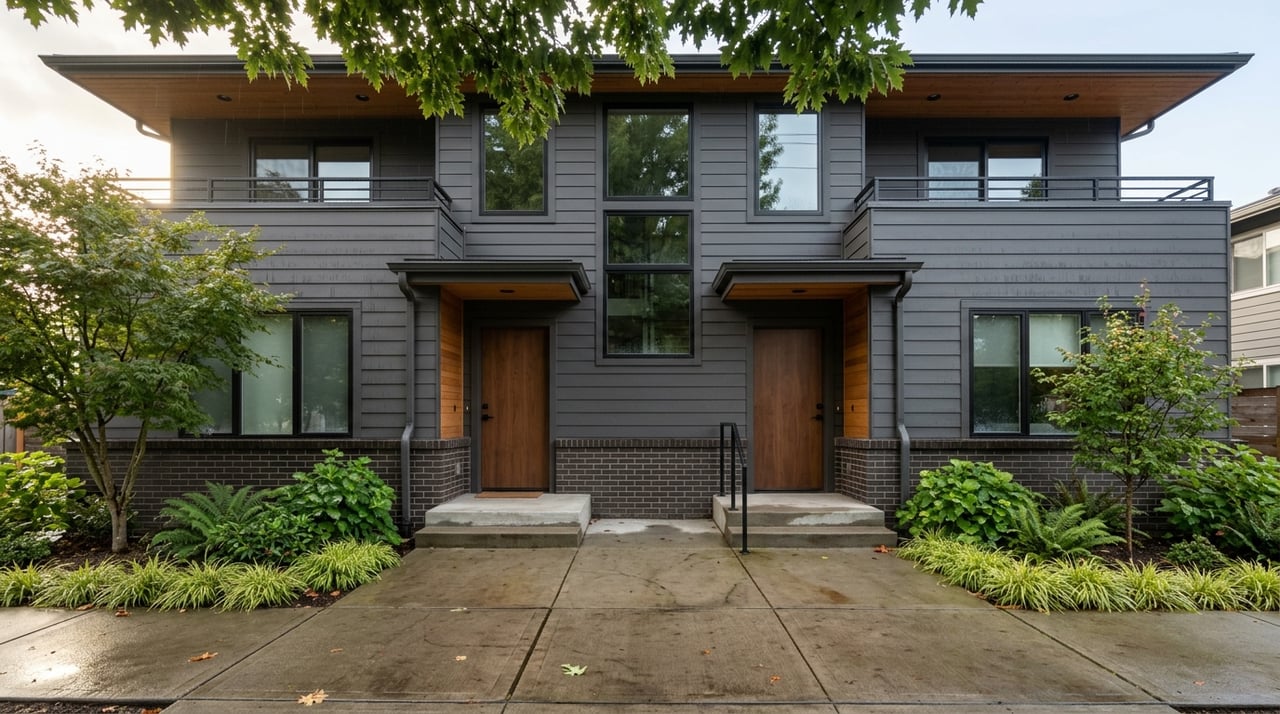
Depending on the area, that can include detached houses, duplexes through sixplexes, townhouses, stacked flats, courtyard apartments, cottage housing, live/work homes, low-rise residential, and low-rise mixed-use buildings. In practical terms, that gives relocating buyers more than one path into the market.
If you want a condo or attached home with easier access to transit and services, the urban core is likely to offer the best fit. If you want a detached home in a more established residential setting, several other neighborhoods may align better with that goal.
A Simple Way to Think About Redmond Price Tiers
Redmond’s overall housing costs are high, but pricing still varies meaningfully by area and housing type. Zillow listed Redmond’s median sale price at $1,248,333 on March 31, 2026.
Neighborhood value estimates show a broad spread. Nearby values ranged from about $863,491 in Downtown to $1,016,930 in Southeast Redmond, $1,148,313 in Rose Hill, $1,246,177 in Grass Lawn, $1,359,084 in Education Hill, and $2,110,659 in North Redmond.
These figures are best used as general tiering guidance rather than exact pricing for any one home. Still, they are useful for building a search strategy.
A practical way to frame the market is:
- Urban core tier: More condo and attached-home options, especially in Downtown and other transit-oriented areas
- Mid-to-upper detached-home tier: Areas such as Grass Lawn, Rose Hill, Southeast Redmond, and Education Hill
- Premium detached-home tier: Higher-value pockets, especially in North Redmond
Where Different Buyers Often Start
If your top priority is a lower-car lifestyle, start with Downtown Redmond, Overlake, and Marymoor Village. These areas line up best with the city’s transit-oriented growth pattern and can make rail-plus-bus commuting far more practical.
If you want a more established residential feel, areas like Education Hill, Grass Lawn, Idylwood, North Redmond, Bear Creek, and Willows/Rose Hill may be worth exploring first. These neighborhoods fit the city’s description of more residential living environments and may appeal to buyers who want a different pace or housing format.
If you are balancing budget with commute, it helps to compare not just list prices but your full monthly carrying pattern. That includes tolls, parking needs, fuel, and how much time you are willing to spend in traffic.
Outdoor Access Can Influence Daily Life
For many relocators, Redmond’s outdoor access becomes part of the housing decision. The city’s parks-and-trails system includes 47 parks, 1,351 acres, and 59 miles of public trails.
Marymoor Village stands out for its location beside Marymoor Park and multiple regional trails. Idylwood is described by the city as emphasizing views of Lake Sammamish and Marymoor Park, along with beach access and walkability.
Grass Lawn is described as a mature and highly walkable neighborhood with Grass Lawn Park. North Redmond also has adjacent open space and planned multi-use trails along the NE 116th Street corridor.
If outdoor access is part of your routine, that can help narrow your search quickly. You may find that proximity to trails, parks, or the lake matters just as much as commute time.
A Smart Redmond Relocation Plan
A successful Redmond move usually starts with a clear set of priorities. Instead of trying to search the whole city at once, narrow your options by matching area type to your daily life.
A simple planning approach looks like this:
- Identify your primary work destination and expected commute days.
- Decide whether transit access or driving convenience matters more.
- Estimate your monthly toll exposure if you will use SR 520 often.
- Choose your preferred housing format, such as condo, townhouse, or detached home.
- Narrow your search to neighborhoods that fit both your commute and budget.
- Layer in lifestyle factors like parks, trails, and walkability.
This kind of search tends to produce better results than starting with price alone. It also helps you compare neighborhoods based on how you will actually live in them.
If you are planning a move to Redmond and want help weighing commute trade-offs, housing options, and neighborhood fit, The Greely Group can help you make the decision with clarity and confidence.
FAQs
What is the best part of Redmond for a Seattle commute?
- Downtown Redmond, Overlake, Marymoor Village, and other station-oriented areas are strong starting points if you want better access to light rail and regional transit for Seattle-bound travel.
What is the best part of Redmond for a Bellevue commute?
- Overlake and other Eastside-oriented transit areas are often the most practical places to start, but driving times can still slow significantly during peak periods even when the distance looks short.
What housing types are available in Redmond?
- Redmond includes detached homes, duplexes through sixplexes, townhouses, stacked flats, courtyard apartments, cottage housing, live/work homes, and mixed-use residential options depending on the area.
What is the median home price in Redmond?
- Zillow listed Redmond’s median sale price at $1,248,333 on March 31, 2026, though pricing varies widely by neighborhood and property type.
What Redmond neighborhoods feel more residential?
- The city describes Education Hill, Grass Lawn, Idylwood, and North Redmond as predominantly residential, while Bear Creek and Willows/Rose Hill also offer more established residential settings in parts of the city.
Should Redmond buyers budget for SR 520 tolls?
- Yes, if you plan to cross Lake Washington regularly on SR 520, toll costs should be part of your monthly housing and commute budget because they can materially affect total living costs.