By The Greely Group
Waterfront property in the greater Seattle area is among the most sought-after real estate in the Pacific Northwest — and some of the most nuanced to buy well. Whether you're drawn to Lake Washington's calm freshwater shores in Kirkland and Bellevue, the saltwater views of Puget Sound, or the distinctive lifestyle of Lake Union's floating homes, each type of waterfront property comes with its own considerations, opportunities, and potential complications. We work with buyers throughout this market, and buying waterfront property in Seattle rewards careful preparation in ways that ordinary residential purchases often don't.
Key Takeaways
- Waterfront inventory in the Seattle area is genuinely scarce, and well-positioned properties move quickly
- Lake Washington, Puget Sound, and Lake Union each present different lifestyle and ownership considerations
- Zoning, shoreline regulations, and environmental rules vary by property and can significantly affect how you use the land
- Maintenance costs and insurance requirements are meaningfully higher for waterfront homes than inland properties
Know the Waterfront Types Before You Search
Greater Seattle's waterfront breaks into distinct categories, each with different price points, lifestyle characteristics, and ownership realities.
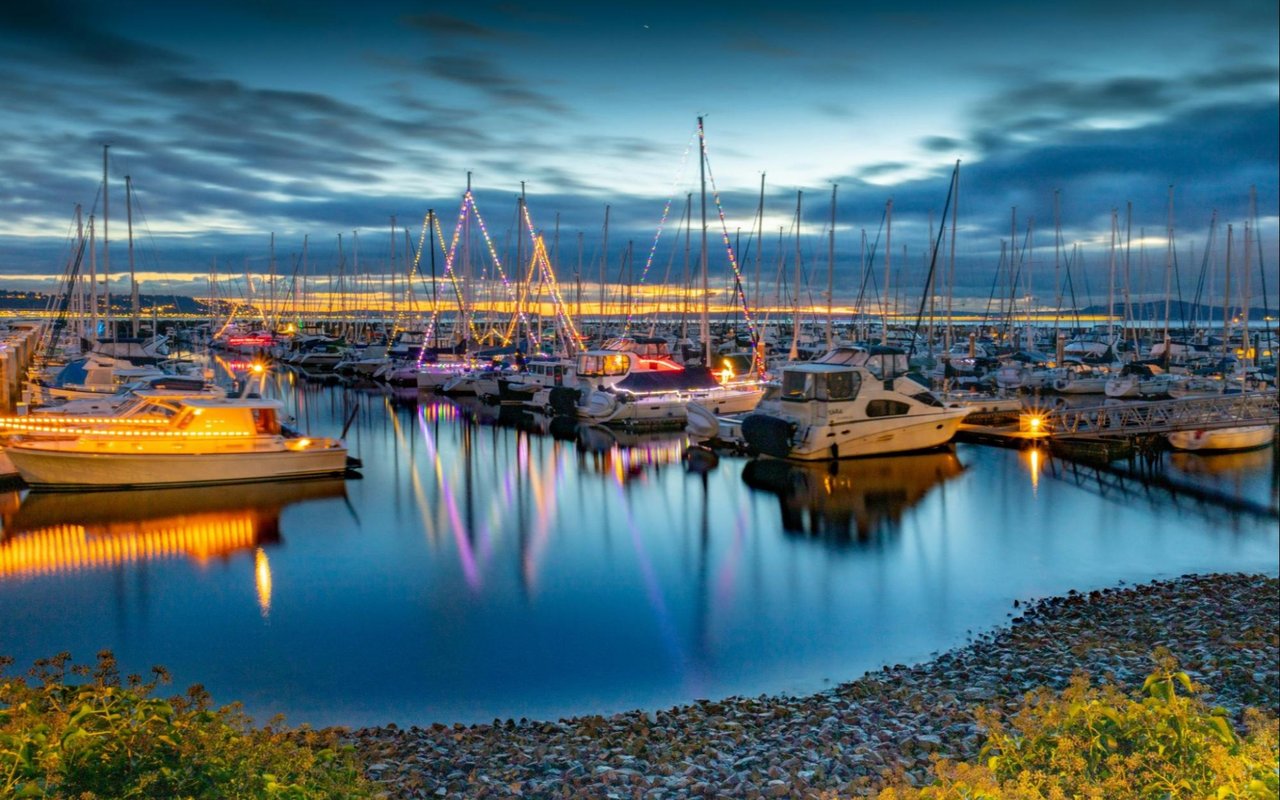
Lake Washington is the area's largest freshwater lake, bordered by Seattle, Bellevue, Kirkland, and Mercer Island. It's known for luxury homes, calm water ideal for boating and paddleboarding, and many properties with private docks. Kirkland's waterfront — from Juanita Bay to Carillon Point — represents some of the most desirable lakefront real estate in Washington State. Lake Washington's water level is managed through the Ballard Locks, which creates predictable seasonal variation of about two feet annually — something to understand when evaluating dock and beach access throughout the year.
Puget Sound properties offer sweeping saltwater views, ferry traffic across the horizon, and the chance to spot marine wildlife from your deck. Shorelines can be rockier, tidal dynamics add complexity, and erosion is a more active consideration than on freshwater properties.
Lake Union and its floating homes offer a genuinely unique living experience — moored to docks, connected to utilities, and offering a lifestyle unlike any conventional home purchase. Financing floating homes requires lenders who specialize in this property type, and HOA-equivalent marina fees add to monthly costs.
Understand Shoreline Regulations Before You Fall in Love
Washington State's Shoreline Management Act governs how waterfront property can be used, modified, and developed, and local jurisdiction adds another layer. Before committing to a specific property, understanding what the regulations allow — and prohibit — is essential.
Key regulatory areas to investigate for any waterfront purchase:
- Shoreline permits for dock construction, modification, or repair — not all properties have existing permitted docks, and adding one isn't always straightforward
- Setback requirements that determine how close to the water structures can be built or expanded
- Vegetation buffers that may restrict clearing or landscaping near the shoreline
- Environmental designations that can affect what activities are allowed on the water or shore
- Local municipality zoning on top of state shoreline rules — Kirkland, Bellevue, and Seattle each apply their own overlay
A real estate attorney familiar with Washington shoreline law is worth consulting before you make an offer on any waterfront property.
Budget Beyond the Purchase Price
Waterfront homes carry higher ownership costs than inland properties at comparable sizes, and buyers who don't account for these going in are often surprised.
Ongoing costs specific to waterfront ownership:
- Flood insurance — required by lenders for properties in designated flood zones, and worth carrying regardless of zone designation
- Dock and bulkhead maintenance — wood docks deteriorate in the wet Pacific Northwest climate, and bulkhead repair or replacement is a significant capital expense
- Erosion management — particularly relevant for Puget Sound properties where wave action and seasonal storm surges affect shoreline stability
- Higher homeowner's insurance premiums generally, reflecting the elevated replacement cost and risk profile of waterfront homes
- Boat slip, moorage, or marina fees if applicable
Request maintenance records and the age and condition of any existing dock, bulkhead, or marine structure before finalizing an offer. These are not cosmetic items — they're major capital assets with finite lifespans.
Work With a Waterfront Specialist
Waterfront real estate involves knowledge sets that go beyond standard residential expertise — shoreline regulations, dock permitting, marine structure inspection, flood zone mapping, and the nuances of evaluating view corridors and seasonal water level changes. Working with an agent who handles these properties regularly saves time and protects you from expensive oversights.
What a waterfront-experienced agent brings to your purchase:
- Knowledge of which properties have permitted docks versus unpermitted structures
- Familiarity with shoreline designation maps and what they mean for a specific parcel
- Relationships with inspectors who specialize in marine structures and waterfront-specific systems
- Understanding of seasonal water level variation and how it affects usable beach and dock access
- Market context for pricing — waterfront comps require careful apples-to-apples analysis based on frontage, dock quality, view quality, and water type
Move Decisively When the Right Property Appears
Waterfront inventory in the greater Seattle area is structurally limited. Lake Washington shoreline is essentially built out, and Puget Sound waterfront in desirable areas near Seattle moves quickly when it comes available. Buyers who spend six months learning the market and then hesitate when the right property appears consistently lose out to buyers who arrived prepared.
How to position yourself to move quickly:
- Pre-approval secured with a lender who understands waterfront property valuations
- A clear sense of your non-negotiables — water type, dock access, view orientation, minimum frontage
- Familiarity with the regulatory landscape so you're not learning it after you find the property
- A trusted agent relationship established before the search, not during it
FAQs
Is waterfront property in Seattle a good long-term investment?
Historically, yes. Waterfront inventory is finite and structurally constrained — you can't create more Lake Washington shoreline. That scarcity has supported long-term value even through market corrections. The properties that hold value best combine quality water access with sound structure and compliant shoreline improvements.
What should a waterfront inspection include that a standard home inspection doesn't?
A waterfront-specific inspection should include evaluation of the dock or pier structure, the bulkhead or seawall condition, drainage patterns near the shoreline, any signs of erosion, and the condition of any boat lift or marine equipment. Make sure you hire an inspector with specific experience in waterfront structures — a general home inspector may not flag issues that a marine structure specialist would catch.
Are there restrictions on what we can do on the water in front of our property?
Yes, and they vary. Washington shoreline regulations govern activities including dock construction, mooring, vegetation removal, and certain water sports in some designated areas. Lake Washington has its own set of rules around powerboat use, wake size, and no-wake zones near marinas and swimming areas. Your agent and a shoreline attorney can walk you through what's specific to a property you're seriously considering.
Connect With The Greely Group
Buying waterfront property in Seattle requires local knowledge, preparation, and an agent who has navigated this market's specific complexities. Reach out to us, The Greely Group, and we'll help you find the right property on the right terms — whether you're looking at Lake Washington, Puget Sound, or somewhere in between.